


This is an occasional post highlighting some talks and events that touch on computer science or computing-adjacent tech and which are not aimed solely at an academic / research audience. This isn’t a complete list (an impossible task!) but is drawn from a range of venues and organisations, some already computer-focused, some that have a wider focus but who sometimes host computing events. If you have a suitable event, particularly ones for which the public / schools / home educators can get tickets for, please let me (Jo) know, thanks.
Ongoing 2026

The Age of AI (exhibition)
In person (Bletchley)
Bletchley Park until late 2026, entry to this exhibition is included with admission.
Experience this exciting temporary exhibition and discover how artificial intelligence is a part of our lives today and how AI could affect our future.
June 2026
Building a career in tech with Christina Lovelock and Beverly Clarke MBE
Online webinar
BCS, The Chartered Institute for IT
2 June 2026, 12.30-1.30pm, FREE
“This session is ideal for aspiring technologists, career changers, educators, and established professionals looking to deepen their impact and stay ahead in this varied and rapidly changing field.”
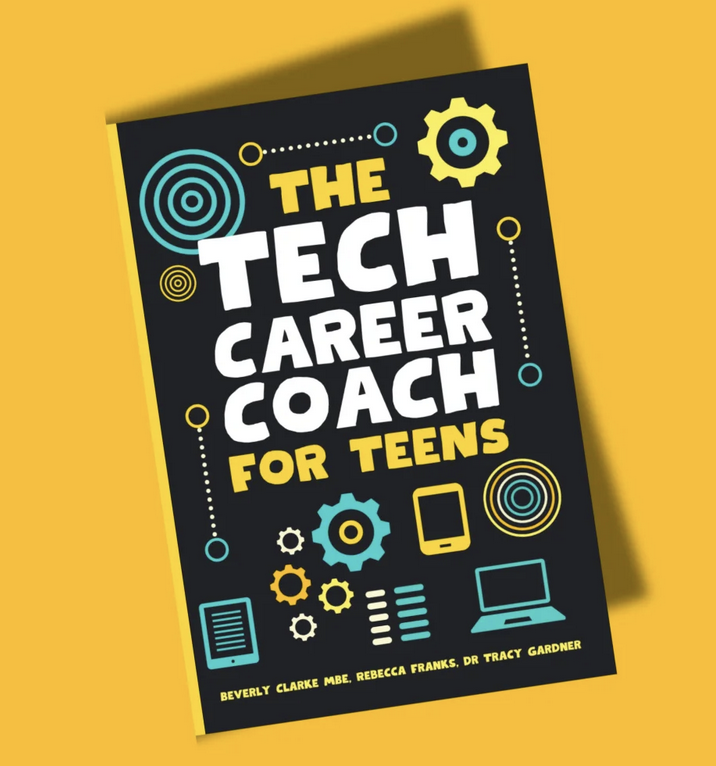
Beverly is also one of the authors of The Tech Career Coach for Teens.
TeenTech Awards: Top Tips
Online webinar
TeenTech
2 June 2026, 4-5pm, FREE
“TeenTech helps young people understand the opportunities science, technology, creative and digital media, and engineering, no matter what their gender or social background. Our lively, focused, age-appropriate initiatives help young people 8-18 understand their potential and raise their aspirations.”
The TeenTech Awards are for students aged 11 to 16 who can work individually or in teams. This webinar is aimed at finalists but appears also to be open to new registrants who want to find out more.
Forging Better Futures for You and AI
In-person (London) and online
Gresham College
Tuesday 2 Jun 2026, 6pm, FREE, Speaker: Prof Matt Jones
“In this last lecture, I will work to wake us from the AI as Overlord spell. We will explore other possible futures, looking first look at the potential of AI fitting in with us: things we can chat to; humanoid robots; or even devices that draw on understandings of pets to make them more palatable and pleasing. Secondly, I’ll suggest a way to weave AI into everyday life: as a “simple” instrument to enable our souls to sing.”
Computing Teachers’ Conference 2026
In-person, London
CAS and King’s College London
Register by 3 June, event on Sat 20th June (9.30am to 5pm)
“This in-person event in central London is open to Key Stage 3-5 computing teachers. It is an opportunity to discuss teaching best-practice with peers, discover new coding tools and pedagogies, and learn from academic staff from the Informatics department about new areas of research, expanding your knowledge beyond the curriculum.” Also blogged about here on Teaching London Computing.
Are We Having the Wrong Nightmares about AI?
In-person (London) and online
King’s College London
4 June 2026, 6.30-7.45pm, FREE, Speaker: Dr Zeynep Tufekci
“…Hear from internationally renowned techno-sociologist and New York Times columnist Dr Zeynep Tufekci, Henry G. Bryant Professor of Sociology and Public Affairs at Princeton University, as she delivers the 2026 Fulbright Distinguished Lecture.
Described by the New York Times as “quietly making a habit of being right on the big things,” Dr Tufekci is widely recognised as one of the most insightful voices on technology and society today.
Held in person at King’s College London, Dr Tufekci will challenge prevailing narratives around generative AI and explore its profound challenges and opportunities.”

Great Exhibition Road Festival
In-person, London
Imperial College London
6-7 June 2026, 12am to 6pm, FREE, but need to register in advance
Enjoy hands-on workshops, fascinating talks, performances and installations from iconic museums, research and culture organisations, including Imperial College London, the Natural History Museum, Science Museum, the Royal Parks, V&A and many more. Whether you’re exploring the stars through the medium of Bollywood dance, building a squishy textile robot or traversing the surface of Mars by tasting chocolate brownies, there’s something for everyone at the Great Exhibition Road Festival!
BCS computing teacher training scholarship: information webinar
Online webinar
BCS, The Chartered Institute for IT
8 June, 5- 6:00pm, FREE
Find out more about the support available through the BCS Computing teacher training scholarship.
The BCS Computing teacher training scholarships programme is a government funded financial incentive to train to teach in England. (If living in Wales, Northern Ireland or Scotland at the time of application you must secure a teacher training place at an institution in England. This scholarship is not available to overseas students.)

Healthcare Engineering Work Experience at UCL
In person, London
UCL
Application deadline: Monday 8 June 2026, 23:59
The event itself, for students aged 16-18, takes place Mon 29 June to Friday 3 July 2026.
Through our structured programme, students will:
- Explore how engineering can improve patient care and public health
- Take part in practical activities inspired by real healthcare research
- Develop problem-solving, teamwork and communication skills
- Gain experience using research tools, laboratory equipment and design software
- Meet UCL researchers, students and healthcare innovators
- Learn about pathways into engineering, healthcare and research careers
- Strengthen their CVs, university applications and confidence
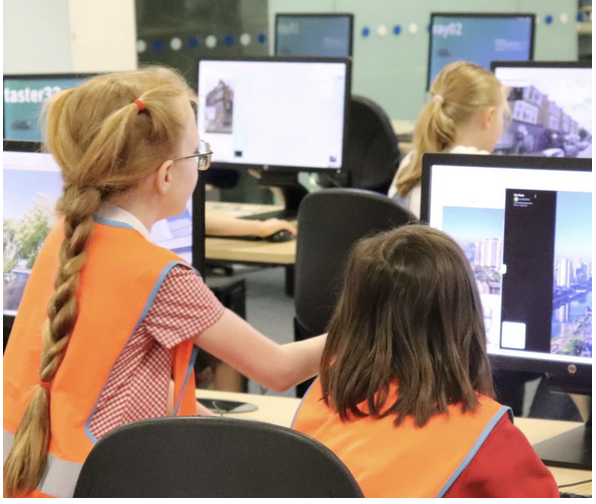
Hello World Hack | Hackathon for Girls (Years 3-5)
In-person, London
Imperial College London
Thursday 11 June 2026, 9.30am to 2.30pm, FREE, but need to register in advance
Hello World Hack is a one‑day hackathon for girls aged 7–10, introducing them to coding and problem‑solving through hands‑on activities such as programming robots and designing apps. Led by Imperial scientists and engineers who identify as women, the event provides positive STEM role models and an inspiring introduction to maths and computing.
This is a girls-only event.
cZeus School Challenge 2026 | Year 7 | Maths and Computing
In-person, London
Imperial College London
Thursday 11 June 2026, 10am to 2pm, FREE, but need to register in advance
cZeus School Challenge 2026 is an exciting national mathematics competition designed for Year 7 students, combining algebraic reasoning with grid‑based logic in a fast‑paced, team‑based challenge that builds confidence, numeracy, and strategic thinking.
The competition is open to all schools, and all participating schools will receive six months’ free access to the cZeus platform, provided by TMGCL, along with support to help track student progress. Schools will run an internal competition, with the top‑performing 10 schools invited to compete in the Grand Final, hosted this year at Imperial College London.
OII 25th Anniversary Public Lecture. Dreaming of a Networked World: Reflections on the Political Economy of the Internet
In person and online
Oxford Internet Institute
15 June 2026, 5.30-7.30pm, FREE. Speaker Dr danah boyd
“It’s easy to scoff at Facebook’s old mission to “connect the world,” but the stark reality is that many of us genuinely believed that the internet could be used to empower everyday people in new and uplifting ways. We were hopeful. We were also naive. We were focused on what youth and hobbyists and activists were doing with the new tool at their disposal. We weren’t attending to how the rich and powerful were limiting which futures were possible in order to ensure that their desired futures were inevitable…”

Media literacy in the age of AI: Evidence and recommendations
Online webinar
Raspberry Pi
16 June 2026, 5-6.30pm, FREE, Speaker: Prof Gianfranco Polizzi
Aimed at educators, open to anyone interested – “This presentation draws on relevant research and evidence to examine the concept of media literacy and its importance in the age of AI, while also considering related and overlapping concepts such as AI literacy. Persistent gaps in media literacy across the UK population will be highlighted, along with some of the challenges involved in equipping both children and adults with the skills they need to thrive in a rapidly changing digital society. Some evidence‑based recommendations for future research, policy, and practice will also be presented.”
The Turing Summer Experience
In-person, Manchester, Birmingham and London
The Alan Turing Institute
Application deadline 19 June 2026
The events themselves, for Y12 students, take place in August and are a week-long data science career experience. See more at the link above (Turing site) or the blog post published here on Teaching London Computing.
- 16 and 17 year olds in their first year of A-levels
- Studying at least one STEM subject
- Interested in finding out more about the world of data science, as well as careers in defence and security
- Identify as coming from a lower socio-economic background
The events take place in these cities in August
3–7 August: Manchester
10–14 August: Birmingham
17–21 August: London
London Universities Sixth Form Computing Conference
In person, London
Imperial College London (South Kensington Campus)
Monday 22 June 2026, 10am to 3pm, FREE
For sixth form students taking A level Computer Science or some computing equivalent, and their teachers (who can register their interest here). Paul Curzon is speaking at this event, also blogged here on Teaching London Computing..
Digital Future Days: Women in Engineering KS3/4
In-person, Bletchley
TNMOC – The National Museum of Computing (at Block H, Bletchley Park)
Wednesday 24 June 2026, 9.45am – 2.30pm, £7.21 per student (minimum 5)
“Are you ready to inspire the next generation of tech enthusiasts and ignite their passion for digital skills? Join us for Digital Future Days at The National Museum of Computing (TNMOC), a thrilling series of educational events designed exclusively for school and home-educator groups, bridging the gap between employers and future employees in the dynamic world of technology. Discover the captivating world of technology within TNMOC’s historic Bletchley Park setting. Immerse yourself in an unparalleled interactive learning experience, surrounded by our unique collection of working historic machines.”

Playful Computing Conference
In-person, London
Digital Schoolhouse
26 June 2026, 10-5pm, £20
Paul Curzon is speaking at this event (in the 11.45am session) on “Teaching across subjects well using autonomy tours“.
🎨 Digital Creativity – tech as a canvas for problem-solving and expression
💰 Cost-free Computing – high-impact teaching on a tight budget
🚀 Career Pathways – connecting the classroom to the creative digital industries
🤖 Responsible Computing – AI, ethics and pupil safety in plain English
Also blogged about here on Teaching London Computing.
July 2026

Three AI-themed events for a general audience.
1 July 2026: Talk: Future-proofing the internet in the AI world – 3-3.30pm
2 July 2026: In conversation: Robots, assemble! – 2-2.40pm
3 July 2026: Talk: Can you hack a Moon mission? – 1-1.30pm
FREE, all in-person, London (and recorded for their YouTube channel)
Royal Society – part of their Summer Science Exhibtion 2026
Suitable for students 14+
Future-proofing the internet in the AI world: Professor Dame Polina Bayvel DBE FRS – “Huge amounts of data are moving around us at any given moment, allowing us to stream and download music, videos and games and to stay continuously connected to one another.
It can be easy to take for granted the technology at our fingertips and to forget that it requires an immense network of undersea and landline optical fibre communications systems with complex sources, amplifiers and receivers, and even satellites in orbit, to make it all possible.
Given that almost every aspect of modern life is reliant on internet access, it’s vital that our global internet infrastructure can withstand future challenges from intentional sabotage to natural disasters.”
Robots, assemble!: with Professor Ingmar Posner, Professor Tim Minshall and chaired by Madhumita Murgia – “With an awe-inspiring global system that enables virtually every aspect of our existence, the world of manufacturing has a seismic influence on our lives. And as global production and supply chains become ever more complex, AI-integrated robots will transform the way we build, recycle and manufacture in future.
But tasks that may seem simple for humans require the ability to sense, plan and perform actions in the physical world that are a major challenge for today’s AI and robotics – a challenge that researchers are determined to overcome. In this discussion, a panel of experts explores this challenge and the future role of robots in building our world.”
Can you hack a Moon mission?: Speaker: Sylvester Kaczmarek – “We may be closer than ever to returning humans to the Moon, but the next era of space exploration will also depend heavily on robots that can operate autonomously. Robotic missions have already explored the Moon and Mars, and many more autonomous missions are planned in the coming years.
But with the communication delays and operational constraints involved in space missions, direct human control is often limited. That means robust, secure, and verifiable artificial intelligence is needed to help space-travelling robots carry out high-stakes tasks safely and reliably, while remaining resilient to cyber-attack.
In this talk, Sylvester Kaczmarek explains why trustworthy AI matters for space missions, how autonomous systems can be fooled or misled, and how researchers are developing ways to make them safer and more secure.”
London Data Week
6-12 July 2026
Various locations and online, free and charged-for events – only 3 events published so far
Data in the public, for the public. “There is huge potential for data to help tackle major issues, such as the cost-of-living crisis and public health emergencies, but many of these solutions require public trust and support. We believe that the most effective and inclusive way to earn this is through engaging with communities.”
When mathematics meets medicine
In-person London
Imperial College London
Wednesday 8 July 2026, 5.30-6.30pm, FREE, Speaker: Professor Reiko Tanaka
Can mathematics help us understand why diseases like eczema affect people so differently? How can computers reveal why some treatments work for certain patients but not others? In this lecture, I will share my journey from control theory and engineering into the world of computational biology and medicine: a path that has been both unexpected and deeply rewarding.
Featured image credit: Microphone image by Michal Jarmoluk from Pixabay
Places that have computing themed talks and events (mostly in London)
Have I missed yours? Please tell me, thanks :)
- Ada Lovelace Institute, London
- Alan Turing Institute, London (see also their Fringe Events)
- BCS – British Computer Society, London and national
- Bletchley Park, Bletchley (museum)
- Centre for Computing History, Cambridge (regularly has family-friendly events)
- Centre for Digital Education, Edinburgh University
- City St George’s University of London, London
- Computer Arts Society, London, Leicester & other venues
- Computing At School (CAS), various
- Computer Conservation Society
- Edinburgh Futures Institute, Edinburgh University
- Fourth Portal, Gravesend
- Gresham College, London
- Highgate Literary & Scientific Institution, London
- Imperial College, London
- Institute of Physics, various
- King’s College London
- London Data Week, London
- The National Museum of Computing, Bletchley Park
- OSHUG – Open Source Hardware User Group
- Oxford Internet Institute, Oxford University
- Raspberry Pi Foundation, Cambridge
- Royal Institution, London
- Royal Society, London
TEDI (The Engineering & Design Institute), London – has now become ASU London- TeenTech
- UCL Lunch Hour Lectures, London
- Warwick Data, Warwick
Subscribe to be notified whenever we publish a new post to the Teaching London Computing blog.
 Teaching London Computing: A RESOURCE HUB from CAS LONDON & CS4FN