List of sessions at the CAS London Conference 2018 – Sat 24th Feb

Updated 6 Feb 2018, v6

The CAS London Conference 2018 will be held on Saturday 24th February at Gladesmore Community College in North London (South Tottenham, N15 6BF). It’s an all day event with an opening keynote from Jon Nixon from Ofsted, and talks, workshops and demos exploring different aspects of Primary and Secondary Computer Science. Download a flyer.

There are four session blocks (2 in the morning, 2 in the aternoon) and you can pick one from each. The full list of workshop and talks is below the ‘plan for the day’.

Doors at 9.10am, opening keynote is at 9.40am, first morning session at 10.20am. There will be other activities and networking opportunities at lunch.

Eventbrite - CAS London Conference

CAS London Conference – plan for the day

Start End Session
09:10 09:35 Delegate registration and morning refreshments
09:40 10:15 Opening keynote John Nixon, Ofsted National Lead for Computing
10:20 11:20 Session 1
11:25 12:25 Session 2
12:30 13:30 Lunch & Drone Demonstration (Staggered lunch start 12:30 and 12:45)
13:35 14:35 Session 3
14:40 15:40 Session 4
15:45 16:15 Plenary: Cyber Schools Programme – Michael Heering (TBC) & Fireflies!

Session 1

  • Primary – Smelly code and primary programming pedagogy with Jane Waite
    In this hands of session, you will mark code and create a practical student checklist of what makes sweet code! Bring along code for marking! We will also look at two very practical methods to review your planning to reveal what pedagogy you already use. We will look at instructional approaches to scaffold learning as well as ideas for encouraging independence and mastery.
  • Primary – iPads Tried and test apps for classroom impact with Gillian Arnold
  • Secondary – pedagogy with William Lau
  • Secondary – AQA exam board session with  Chris Swan
  • Primary –  Using tangible programming to support SEN children with the computing curriculum with Jody Carter
  • Primary/Secondary – Minecraft (using virtual worlds and programming) with Simon Johnson (CLC Cimon)
  • Secondary – Python Introduction with Jon Feleppa
  • Creative projects with the micro:bit (python focus)
  • A level – Databases in Python with Hardip Mothada
  • A level – OOP with William Marsh

Session 2

  • KS2/3 – FastForward. Machine Learning & Big Data including digital identity With Paul Curzon and Jane Waite
    Are driverless cars fact or fiction? Can machines make better AI than humans can? How is our data used? Can we support our young people to understand their online (and real life) persona? Practical ideas for starters, plenaries and projects. 
  • Secondary – Algorithm writing with pseudo code and flow charts with Trevor Bragg
  • Secondary – Edexcel exam board with Atif Khan
  • Primary – Physical computing pedagogy session – not what to teach but how to teach physical – including use of spheros, microbits, bluebots, drones with Nic Hughes
  • Primary – Google classrooms/G Suite – Darren Murphey & Wendy McLeod
  • Secondary – Creating websites with HTML
  • Secondary – Stride (a framebased editor to transition from blocks to text) with Michael Koelling
  • A level – Teaching embedded systems with Arduino and Linker with Michael Jones
  • A level – Teaching Boolean Algebra & Karnaugh Maps with Eliot Williams

Session 3

  • Early Years and KS1 – Cubetto and Early Years with Helen Cheung & Eleni Vasileiadou
  • Drones with the Royal Academy of Engineering (KS3 focus but may be of interest to KS2) with Scott Atkinson & Ivan Gutowski-Smith
    This session will explore how drones work and how they can be used for civilian, humanitarian and commercial purposes. This resource is designed as an introduction to the uses of drones, aimed at dispelling the myth that they are just weapons or toys. In fact they have wider ranging practical civil, humanitarian and commercial applications. We will also explore how drones can be reverse engineered, exploring ways in which enquiring minds can build their own functioning quadcopter. All the resources are also available on our website at: https://www.raeng.org.uk/education/schools/teaching-and-learning-resources/curriculum-resources including Engineering in the Movies and RAF100 ‘Aiming for Awesome’ which will be demonstrated during this session.
  • A level – NEA project assessing/ standardisation with Garfield Godon
  • Secondary – OCR exam board with Vinay Thawait
  • Primary – Scratch Maths (Year 6 resources) with Pier Saunders (UCL)
  • KS1 to KS4 – Networks with Duncan Maidens (back by popular demand)
  • KS4 – Teaching data representation (with practical activities that involve manipulating images and sound in Python) with Alex Hawden-Bennet
  • KS3/4 – Pedagogy for programming – PRIMM with Sue Sentence
  • A level – C# with Martin Richards
  • KS4/5 Data Analysis with Jupyter Notebooks –Michel Wermelinger and Clifford French
    Michel Wermelinger will demonstrate how to use Python in Jupyter Notebooks, running in a browser, to analyse data on world diseases. Jupyter notebooks provide an intuitive, easy to use environment that integrates explanations, exercises and the output of the code so that students program incrementally and get immediate feedback. Teachers will be able to use what they learn both in computer science lessons and in Science or Geography at KS4 (or higher) with no need to install software.

Session 4

  • Primary – Assessment with Phil Bagge
  • KS3/4 – Embedding Computational Thinking with Rob Heathcote (PG Online)
  • Primary – Unplugged programming and programming with Scratch
  • Primary – LGFL cross curricula with VR with Bradely Dardis
  • KS2/3/4 – Cybersecurity with Duncan Maidens
  • KS4 – CraignDave – Challenges of teaching GCSE and flipped classroom solutions.
  • KS4/5 – Sorting and Searching Algorithms in Python with Demetrios Skamiotis
  • A level – Advanced Python e.g. Web Development Frameworks and Python with Sue Sentance
  • A level – Big O notation with Python with Ramzi Ramzi
    This session will cover what Big O is, explaining O(1), O(N), O(N^2), and O(log N). Practical online activities will get you  coding each example in Python using variously sized datasets (whilst hopefully not crashing all of computers!) By the end of the session, you will feel more confident explaining and showing students, what Big O is using Python.

Eventbrite - CAS London Conference

Two CAS London Teach A-Level Computer Science courses in Autumn 2017

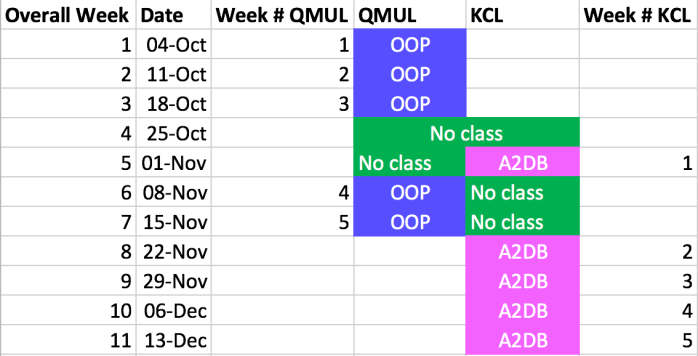
Update 18 September 2017: The A2 Projects with Databases & Python course (pink in the diary image below) is now full but we have spaces on the Object Oriented Programming course at QMUL (blue in the image below). If you’re attending the A2DB course you’ll be able to attend the OOP one as well.

Screenshot 2017-10-13 10.57.40


We have two ‘Teach A Level Computer Science’ courses coming up later this year. Please bookmark this page as it will shortly be updated with details of the earlier course (to be held at Queen Mary University of London in October / Nov). The details of the later course (to be held at King’s College London Waterloo in Nov / Dec) are below. Both cost £100 and free places are available for CAS Master Teachers.

  1. Teach A-Level Computer Science: Object Oriented Programming
  2. Teach A-Level Computer Science: A2 Projects with Databases and Python

Please note that these courses are for in-service teachers who are already confident in teaching computing at GCSE level, Python will be the programming language used.

The course dates are arranged so that it will be possible for teachers to attend both courses.


1. Teach A-Level Computer Science: Object Oriented Programming

Find out more and book a place

Course dates

  • Wed 4 October
  • Wed 11 October
    [Break – Wed 18 Oct]
  • Wed 25 October
    [Break – 1 Nov]
  • Wed 8 Nov
  • Wed 15 Nov

Location: Queen Mary University of London
Tutor: Dr William Marsh, CAS London

2. Teach A-Level Computer Science: A2 Projects with Databases and Python

Find out more | Apply for a place

Course dates

  • Week 1 (1 Nov 2017) – Single table databases and sqlite3
    [Break – 8 Nov]
    [Break – 15 Nov]
  • Week 2 (22 Nov 2017) – Foreign keys and relationships
  • Week 3 (29 Nov 2017) – Many-many relationships
  • Week 4 (6 Dec 2017) – Developing a project for A-Level Part 1
  • Week 5 (13 Dec 2017) – Developing a project for A-Level Part 2

Location: King’s College London, Waterloo
Tutor: Dr Sue Sentance, CAS London

For more information please contact Jo (j.brodie@qmul.ac.uk)

Surveying computing teachers – primary programming and micro:bit use in secondary classes

If you’re a Computer Science or Computing teacher at secondary or primary level we’d be very grateful for your input in any of the surveys below please :)

PRIMARY TEACHERS

1. Using Design in Primary Programming – Research Project
This survey is run by Jane Waite as part of her research at Queen Mary University of London (one of the two universities which forms the CAS London Regional Centre).

Jane says…

Last year, I started research looking for a magic bullet for teaching abstraction in primary schools. However, I discovered that research requires you to look at one tiny aspect of a big subject in order to gradually build a solid body of evidence. So now I am focusing on one aspect of abstraction, how we use design when teaching programming, and how we might reuse our expertise in teaching writing when we teach programming.

My work builds on research from across the world, but all of it with older pupils. From Israel to the US via Scotland, Netherlands and Germany I am knitting threads of theory and practise together but for teaching younger learners.

If you teach programming to primary children, in school, out of school, formally or informally and have 15 minutes to spare, I would be indebted if you could complete our survey, the link is https://goo.gl/forms/EQFaZvBBPjOeZNin2 or https://tinyurl.com/design-JW

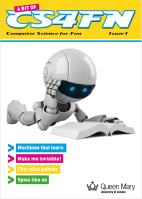
2. Please tell us what you thought of A Bit of CS4FN
abitofcs4fn front cover screenshotSome of you will have subscribed to receive printed copies of our newest version of CS4FN magazine – the mini ‘A bit of CS4FN’ edition for primary schools. We’ve posted them out and would love to know what you think of them. This survey is also from Queen Mary University of London.
Please tell us how you found the magazine and website:
https://bit.ly/abitofcs4fnsurvey

SECONDARY TEACHERS

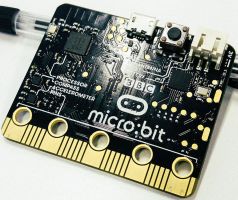
BBC_MicrobitThe research survey below is from the CAS London team at King’s College London, looking at how teachers are using the BBC micro:bit in their classroom.

TEACHING WITH THE BBC MICRO:BIT
You are invited to participate in a web-based online survey on using the BBC micro:bit in your programming classes. This is a research project being conducted by Filiz Kalelioğlu and Sue Sentance at King’s College London. It should take approximately 10-15 minutes to complete.

Short courses at a glance

Short courses from CAS London
2017 course dates and prices are in brackets, similar prices and dates are envisaged for 2018.

  • KS3 Teach KS3 Computing – January to March
    (8 sessions, £160, 23 Jan to 20 Mar)
  • MA module in Computing Education – January to March
    (10 sessions, £1,150, 17 Jan to 28 Mar)
  • KS4 Teach GCSE Computer Science – April to July
    (10 sessions, £200, 24 Apr to 3 Jul)
  • KS5 Teach A level Computer Science: Algorithms and Data Structures – March
    (5 sessions, £100, 1 Mar to 29 Mar)
  • KS5 Teach A level Computer Science: Object Oriented Programming in Python – June to July
    (5 sessions, £100, 7 Jun to 5 Jul)
  • Diving Deep into Primary Programming – Summer / Winter
    (All-day session, £60, 9 Jun)
  • KS5 Teach A level Computer Science: A2 Projects with Databases and Python – September to November
    (5 sessions, £100, 1 Nov to 29 Nov – register of interest full, please contact Jo Brodie (j.brodie@qmul.ac.uk) for waiting list information)
  • Diving Deep into Primary Programming – Winter / Spring
    (All-day session, £60, tbc)

Teaching London Computing / CS4FN subscribers’ bulletin – November 2016

We have a number of mailing lists. One is for teachers anywhere in the UK who have signed up to receive copies of CS4FN magazines for their school, another is for teachers in London who have signed up to hear information about new courses and resources from Teaching London Computing. Some things are relevant only to London-based folk and some for anyone in the UK – the text below is the ‘full’ list which I sent out by email in November. To avoid annoying all our lovely teacher colleagues I made the email fairly basic plain text but with no restrictions on our website there are pictures, in living colour :-)

Jo Brodie, CAS London administrator

royalsoc
Royal Society’s Computing Education survey

The Royal Society has launched a ‘major survey of computing education in schools’ which offers teachers an opportunity to share how computing is taught and resourced in their schools. Please take the opportunity to contribute. The survey is part of the Royal Society’s Computing Education project and remains open until Friday 23rd December 2016.
[link with survey information] [link for Royal Society’s news release about the survey]

New CS4FN magazine
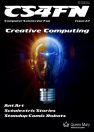
cs4fn22Currently at the printers is the latest CS4FN magazine, issue 22 on Creative Computing, copies of which will be sent to subscribing schools. You can download a free copy of the PDF of the magazine now though.
[link to PDF]
[link for UK schools who are not yet subscribed to CS4FN]


New videos on Teaching London Computing‘s YouTube channel

https://www.youtube.com/watch?v=Pvd7qJxsCW4

Prof Paul Curzon has run a number of free workshops for teachers about how to use unplugged techniques to bring computational thinking to the classroom and people have often asked us if we could record these and then share videos and clips. Yes we can! We’re adding these to our YouTube channel and also subtitling them as we go – we’re also linking back to information on our website where you can download the relevant classroom activity and other materials. Please take a look and share these with colleagues.
[link to our YouTube channel]

The more London-centric bits are below

swiftplayground
Swift playgrounds coding session

Apple are offering a morning (9-12pm) or afternoon (1-4pm) session to “Explore how the Swift Playgrounds app for iPad can make learning to code fun and interactive for your students” in London on Friday 13 January 2017.
[download the invitation, which includes a registration link]


CAS London Conference 2017 – SAVE THE DATE: Sat 25 Feb 2017

casconf2017
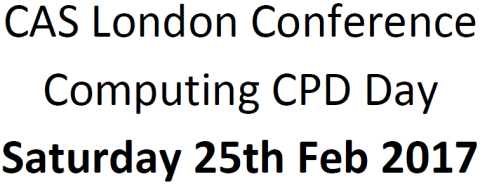
Following our successful conference earlier this year we’re delighted that Gladesmore Community College (South Tottenham, N15 6EB) will once again host the CAS London Conference on Saturday 25th February next year. This is for anyone who teachers computing from primary to secondary (including A level) and costs £25 for a whole-day event with plenaries and workshops. Tickets aren’t available yet but please put the date in your diary, bookmark this page (and download a flyer for your classroom – free registration required).
[link for more information, and a flyer][link for tickets]

soundofmusiccomputing
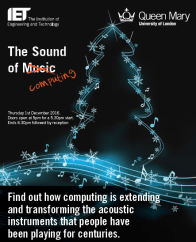
Free schools event – The Sound of {Music} Computing

Dr Andrew McPherson from the Centre for Digital Music at Queen Mary University of London will be giving a free twilight talk for schools at the People’s Palace at QMUL. The one hour talk is from 5.30 to 6.30pm with post-talk mince pies and takes place on Wednesday 14 December 2016. It’s aimed at secondary schools but is family-friendly and all are welcome. Andrew will be talking about how computers help us make music, and demonstrating his Magnetic Resonator Piano.
[link for free Eventbrite tickets] [event flyer] [link for more information]

Short courses for KS3, GCSE and A level Computing
We have a number of short courses taking place at King’s College London for teachers starting in 2017. Our KS3 course runs from January to March over 8 sessions, we have a 10-week Teach GCSE Computer Science course from April to July and three 5-week courses for those teaching A level computing, including modules on algorithms and data structures, object oriented programming in Python and projects with databases and Python. Full details including costs and links to Eventbrite tickets for each course below.
[link to more information about CAS London short courses]

Money available to support London teachers’ CPD / subject knowledge enhancement

Screen Shot 2016-03-23 at 16.09.35

As one of the projects funded by the Mayor of London’s ‘London Schools Excellence Fund’, or LSEF, we receive the regular LSEF bulletins and this caught my eye…

Screen Shot 2016-03-23 at 16.07.39
…its text says…

“Calling all London teachers – LSEF Legacy Teacher Innovation Fund launched
Teachers can apply for up to £10,000 to boost their subject knowledge. The aims of the Fund are to:
•    Improve teacher subject knowledge and pedagogy
•    Improve students attainment and progress
•    Make available more resources and tools to use inside and outside of the classroom.
Please share this with your school networks.  The deadline for application is 12pm on Monday 16th May 2016. To apply please download an application form here.”

There is money available to support teachers in London develop their own knowledge and share their learning with other teachers. Computer Science is explicitly listed among the subject options, which also includes languages, maths, science and tech.

From the FAQ, teachers / applications must satisfy the following London Teachers Fund Criteria –

  • Improve the subject knowledge and pedagogy of teachers
  • Improve students attainment and progress
  • Make available more resources and tools for teachers to use in the classroom
  • You need to be a qualified teacher working in a school or state supported education provision in one of the 33 London Boroughs

Visit the Shine Trust’s website (who are managing the innovation fund for LSEF) for more information and links to application forms and the FAQ etc. Good luck :)

If you’re 7-19 there’s a Computer Animation Competition for you – #Animation16

Screen Shot 2016-02-11 at 11.12.05

Animation16 – the 9th Annual UK Schools Computer Animation Competition run by the School of Computer Science at The University of Manchester, is open for registration and entries!

If you’re 7-19 there’s a Computer Animation Competition for you – #Animation16

Funded by Electronic Arts, Autodesk, and Microsoft, in association with Computing At School and cs4fn, the competition is open to all UK school students aged 7-19, and the deadline for entry is on Friday 18th March:

Teacher registration is FREE and carries no obligation to submit any entries. All registered teachers will receive FREE colour A2-sized Animation16 posters for their school. To get your free posters — while stocks last! — register at the website or log in using your existing credentials: http://animation.cs.manchester.ac.uk

Entrants can create their animations (time limit: 1 minute) using any of the following programs: Scratch, Adobe Flash, Alice, Blender, Maya, 3DS Max, Muvizu, Synfig Studio, Serif Draw Plus, KoolMoves, or SWiSH Max4

There are great prizes for the winners, and trophies for schools. Winners will be announced in May 2016 and the Awards Ceremony will be at the National Media Museum in Bradford on 12 July 2016.

Last year’s Animation15 competition was bigger than ever, with over 820 entries from 127 schools across the UK, from 1,057 students. We awarded prizes to 42 students (working as individuals, or in groups, max size 4) from 26 schools. You can see all the winning entries on our Youtube channel: https://www.youtube.com/user/AnimationComp/

Key dates
* 18 March 2016: Deadline for submitting entries
* 12 July 2016: Awards Day at the National Media Museum

Key contacts
* Website:   http://animation.cs.manchester.ac.uk
* Enquiries: toby.howard@manchester.ac.uk
* Twitter: @AnimationComp #Animation16
* Facebook: https://www.facebook.com/AnimationComp

[FREE] BBC micro:bit training for teachers at CAS East London Hub meeting

CAS East London Hub Meeting: BBC micro:bit training [tickets]

Thursday 19 November 2015 from 4:45- 6:15pm, Free.
East London Hub
City & Islington Sixth Form College

BBC micro:bit Training. Hands-on session teachers of year 7’s to find out about using the micro:bit. For further information: Ceinwen Hilton (ceinwen.hilton@candi.ac.uk)

PROGRAMME

Time Topic
16:45 Registration and Refreshments
17:00 Introduction
17:15 Practical
18:00 Feedback

Tickets for this event (free)

Our next events: [teachers] free workshop, not-free ‘Intro to Arduino’ miniCPD, [kids] free magic show

Our diary of events is as follows, everything is taking place at QMUL (Mile End Campus). Details and tickets below.

  • Saturday 21 November (1-5pm) £30/60
    Introduction to Arduino, with Nicola Plant – a ‘miniCPD’ session on programming using an Arduino with simple electronics
  • Wednesday 25 November (5-6.30pm) FREE
    Sorting Unplugged, a free workshop with Paul Curzon
  • Saturday 28 November (1-5pm) £30/60
    Introduction to Arduino, with Nicola Plant – a ‘miniCPD’ session on programming using an Arduino with simple electronics – note that this session is identical to the one on the 21st, we’re running it twice
  • Wednesday 2 December (5-7pm) FREE
    The IET Christmas Children’s Lecture on ‘The Magic of Christmas Computer Science‘ with Paul Curzon and Peter McOwan

More details and tickets
Events for Computing teachers in London

Introduction to Arduino – Aimed at teachers of pupils at KS3 and above our miniCPD session will introduce you to programming using an Arduino with simple electronics. There are two identical sessions on Saturday 21 and Saturday 28 November, from 1-5pm, both capped at 15 guests.
[Tickets for 21 Nov session] [Tickets for 28 Nov session] £30 (London teachers) / £60 for teachers outside London

Sorting Unplugged‘ – demonstrating some practical and powerful ways to teach basic sort algorithms using unplugged methods, Wednesday 25 November 2015, from 5pm.
[Get a free ticket for this workshop]

Aimed at secondary school children and young people

The Magic of Christmas Computer Science‘ – a magic show powered by hidden computer science. Profs Paul Curzon and Peter McOwan present the IET’s Christmas children’s lecture
[Get a free ticket for this magic show]