
This is the full text of the 8th newsletter which I (Jo B) send to all London-based teachers on our Teaching London Computing subscription list. Teachers outside London usually get a shorter version with anything geographically irrelevant (ie things happening in London) removed, however during lockdown this is less clear. I also send an occasional version to our international subscribers. Details in the text below on how you can sign up if you’re reading this for the first time and would like to get the emailed version in future.
Dear colleagues
Welcome to November 2020’s Newsletter 8 (previous newsletters live here), which is full of online events and courses (mostly free) and some additional resources on the Teaching London Computing website.
We are currently working on the next issue of CS4FN magazine, which should be arriving in the Spring 2021,changes to working practices during coronavirus had made it impossible to publish an issue this year although all of our previous issues are free to download as PDFs.
As always please feel free to share this newsletter by forwarding it to colleagues in case they’d like to sign up too – new readers can sign up using the orange form on this page. You are receiving this email because you’ve previously signed up to the ‘TLC mailing list’ to hear about new courses and resources etc but if you no longer want to hear from us please let me know (j.brodie@qmul.ac.uk) and I’ll remove you.
TechPathways London – announcment
QMUL are very excited to announce that we are working with London Connected Learning Centre again on the TechPathways London programme. Funded by the Mayor of London we are supporting educators who teach young people from the age of 11 to 25 about computing. To find out more about the programme look here. We won an award the last time we worked on this programme… so it must be good. TechPathways London also has a newsletter, scroll to the end of their website and subscribe.
Best wishes Jo
Follow us on Twitter @cas_london_crc or @cs4fn.

COURSES
1. Teaching programming – for IT professionals who teach in schools or work
2. Other CPD courses for teachers
3. The Skills Toolkit
RESOURCES
4. Vignettes of how computing and tech are used in the real world (good and bad!)
EVENTS
5. Alan Turing Institute events
6. “Anyone can code? Power, inclusion and the coding fetish”
OTHER NEWS
7. New book – with chapters from Paul Curzon and Jane Waite
8. Home Learning – most resources don’t need a printer
9. Lockdown Lectures – Teaching London Computing’s YouTube channel
10. UK National Data Strategy consultation

1. Teaching programming – for IT professionals who teach in schools or work
FREE: This course is aimed at IT professionals, adapted from our teachers’ course. Please pass this on to friends and colleagues in industry. It’s suitable for IT people who are helping to run code clubs etc for schools, or for those who are just training new colleagues.
This is a long course, over four sessions on Wednesdays, 6-7.30pm from 25 Nov to 16 December.
[More info on our blog post][Eventbrite tickets][PDF flyer]
2. Other CPD courses for teachers
AQA – Computing CPD courses [GCSE] [A-level]
NCCE Computing courses
– see also How teachers train in Computing with our free online courses blogpost from Raspberry Pi (whose courses are part-supported by NCCE)
OCR – Computer Science and ICT courses
STEM – CPD in Computing (bursaries are available)
3. The Skills Toolkit – general IT / programming courses collated and linked from a Government portal
https://theskillstoolkit.campaign.gov.uk/
The Gov’t has created a new Skills Toolkit page to highlight free online digital courses including programming (but also a wide range including maths, business, finance, digital marketing, graphic design). Course providers include Microsoft and Google. All are free and most are self-paced. There are 19 courses on Computing (including cybersecurity, computer networks, artificial intelligence (AI) and cloud computing) and 10 on programming (including HTML, CSS, Python, C, C++).

4. Vignettes of how computing and tech are used in the real world (good and bad!)
We hope that these pages will help spark some interesting discussion and debate in classrooms.
Computing and Society highlights problems such as biases in algorithms and other technology, ethical concerns about data use and privacy problems that arise from not having considered how tech might be used.
In more cheering news a school hired a 10 year old Nigerian computer whiz to help them teach children to code, we’ve added that to our new page about Positive Stories in Computing.

5. Alan Turing Institute – free events
The Alan Turing Institute runs free public events (as well as conferences for a technical audience).
- Data Debates: Bots in the polling booth – Tue 10 Nov, 5.30-7.30pm
- Modern cryptography in the context of electric vehicles – Wed 11 Nov, 4-5pm
- Data Debates: Talking about my generation – Thu 10 Dec, 5.30-7pm
6. Anyone Can Code? Power, Inclusion, and the Coding Fetish – FREE EVENT
Dr Kate Miltner, Centre for Research in Digital Education, Edinburgh
1-2pm, Wednesday 11 November 2020 [tickets]
Drawing on a case study from an American coding school, this seminar will interrogate common coding-related claims.
“Over the course of the past decade, learning to code has been positioned as a silver-bullet solution to a variety of structural social concerns, including social mobility for the economically marginalized and the underrepresentation of women and BAME individuals within the tech industry. In response to this discourse, a growing industry of coding ‘academies’ has developed across the globe, insisting that “anyone can code” and get a well-paid tech job with a few months’ intensive instruction. Drawing on a case study from an American coding school, this seminar will interrogate common coding-related claims and illustrate how subtle gatekeeping mechanisms at play within these schools end up subverting the well-intentioned goals they set out to achieve.”

7. New book – with chapters from Paul Curzon and Jane Waite
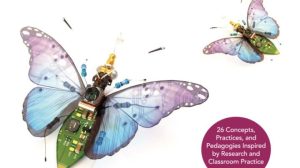
Shuchi Grover’s new book ‘Computer Science in K-12: an A-Z handbook of teaching computing’ features contributions from Paul and Jane. Paul’s chapter, co-written with Shuchi, is called “Guided Exploration Through Unplugged Activities” and Jane’s chapter, co-written with Shuchi, is called “Worked Examples and Other Scaffolding Strategies” and you can find out more about the book and see/hear Paul and Jane give a tiny YouTube introduction to their chapters on our blog post.
8. Home Learning – most resources don’t need a printer
During lockdown earlier this year we went through our resources and picked out ones that can be done without a printer and adapted others so that they can be done on-screen. All our ‘Computing At Home’ resources are free, and divided into primary and secondary age groups https://teachinglondoncomputing.org/computingathome/
9. Lockdown Lectures – Teaching London Computing’s YouTube channel
We recorded Paul Curzon’s free Lockdown Lectures over the summer and will be adding the edited versions to our YouTube channel here – the first one “The Chocolate Turing Machine” is already there, along with previously added videos.
10. UK National Data Strategy consultation
Relevant documents: https://www.gov.uk/government/publications/uk-national-data-strategy
Closes 11:45pm 2 December 2020
Your class might be interested in the information and commentary about data and how it’s used, but also about how Government consultations work.