This is a self-directed worksheet from the Royal Geographical Society, aimed at geography students studying for GCSE or A-level. Given that geographical information systems are “computerised systems for the collection, storage, analysis and presentation of geographical information in digital form” I thought computing teachers might like to know about this, in case there’s an opportunity for a joint Computer Science / Geography class, or just for general interest.

Royal Geographical Society (RGS)
An introduction to Geographical Information Systems (GIS) – from which you can download the 9-page PDF.
“At their simplest, they are used to display and to interact with digital maps. However, there is more to GIS than mapping. They are used to analyse and to extract meaning from geographical data, doing so by harnessing the power of location – knowing what happens and where.”
More interdisciplinary “Computing and…” subjects.
An example of a job that uses mapping software and skills
Some basic mapping using Google Maps
– where do our visitors come from?
WordPress (which hosts our blogs) tells us how many people have visited our site from all around the world, in total this year it was about 156,000 visits made by over 81,000 people. We have the most visits from the US (45,000 in 2025) and the UK (38,000) as these are English-speaking countries with large populations interested in computer science, but we’ve had visitors from everywhere. In fact if you consider regions then England brings the most visits (there are more people in the US but they are split into more regions than the UK!). In some countries only one person or two people there visited us, so the map below only shows that at least one person from that location has visited our site. I made this map in Google’s MyMaps which lets you take a table of data (for example post codes, or in this case names of countries) and it will automatically position this on a map for you.
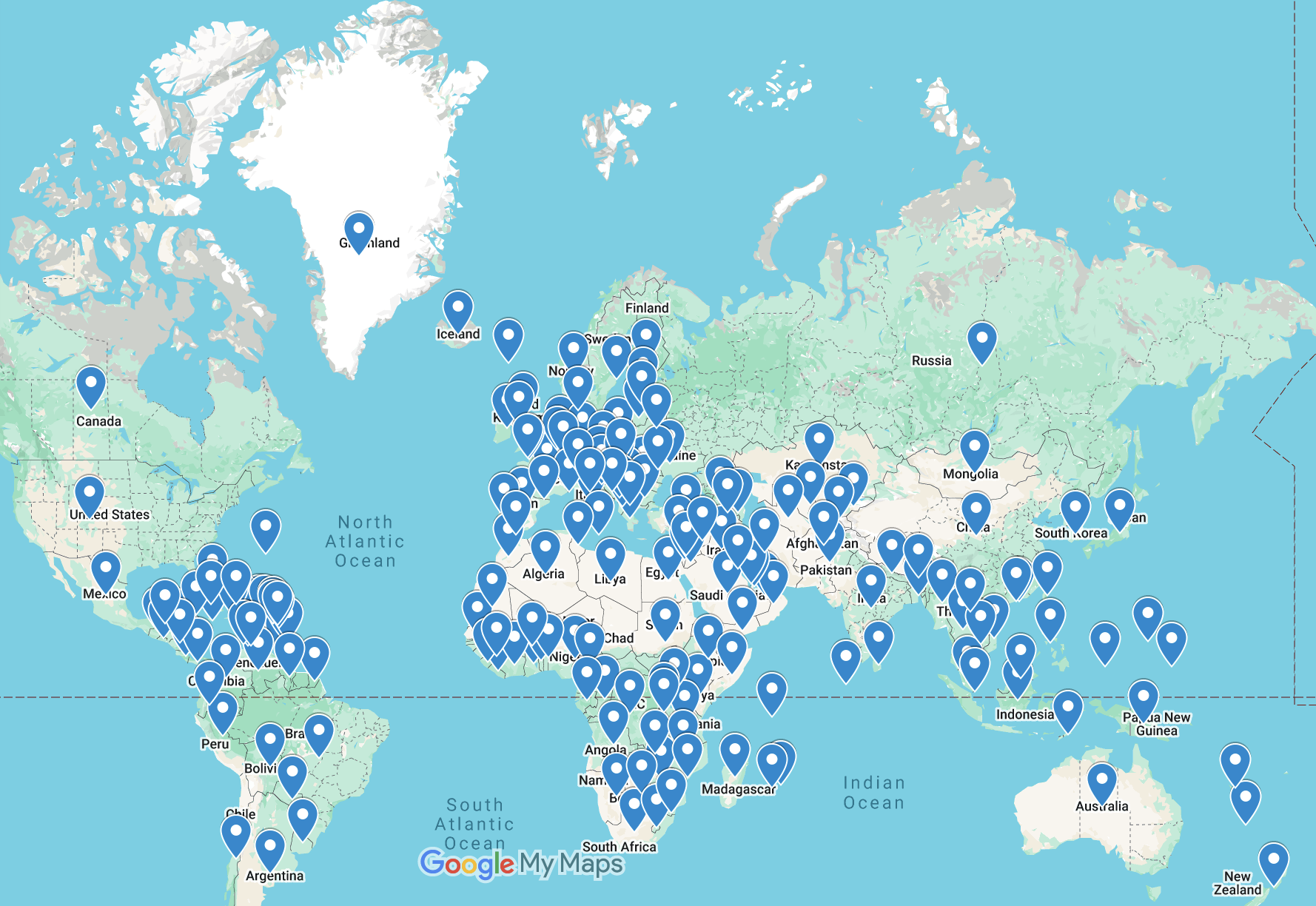
A total of 81,000 people have visited but some of them will have visited more than one page so the total number of visits they’ve made is 156,000 in the last year. 38,000 of those visits came from people in the UK, 45,000 from people in the US and the remaining spread among all the other countries.
 Teaching London Computing: A RESOURCE HUB from CAS LONDON & CS4FN