


CS4FN (Computer Science For Fun) is our sister site for schools and is full of articles and stories about computer science aimed at a school-age audience: https://cs4fn.blog. You might already receive free print copies of our magazines to give to your students or use in class (if not you can sign up here using the purple form); our most recent magazine is Issue 29, on Diversity in Computer Science (take a look at the PDF).
We regularly publish new blog posts there and as we expand on a topic we create a portal for it, to gather in one place all our articles on a particular theme (see our full list of portals here). Some of these articles or themes will also form the basis for a later edition of the CS4FN magazine, along with new articles.
Teachers tell us that they use our stories and magazines to spark discussion in the classroom, or for independent reading (particularly for our primary-aged magazines), alongside the classroom teaching resources that we publish on this site.
Here is a selection of recently-published blog posts from CS4FN that we hope you find interesting.
Do let us know if / how you use our resources, follow @CS4FN on Twitter & Paul Curzon on LinkedIn.

1. Debugging at a distance
2. Puzzle over how images are stored
3. The history of email attachments
4. Solve the puzzle to find where the tombs are
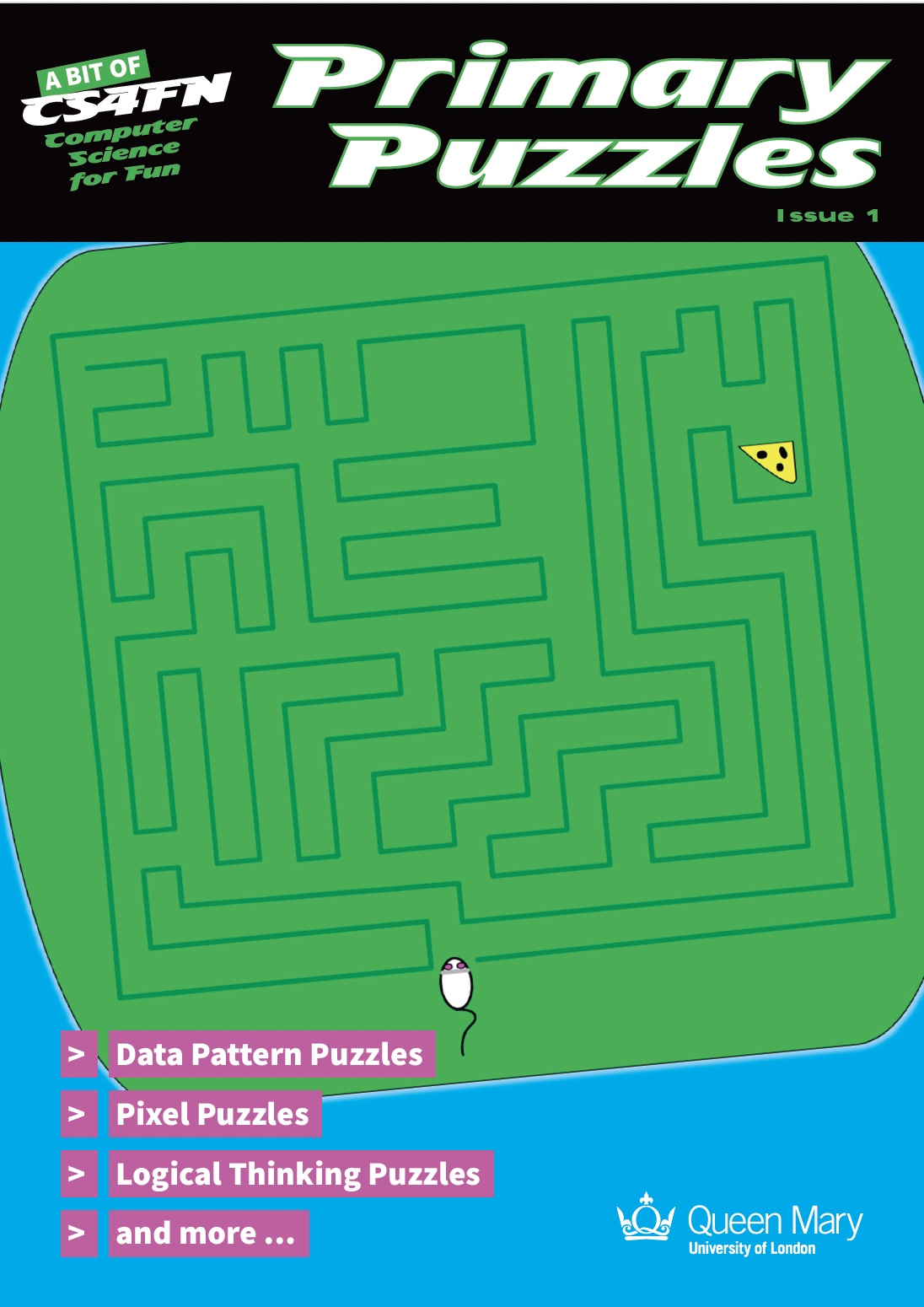
5. Primary Puzzles booklet for kids – free copies available

We’ve just published the first in our series of mini puzzle booklets for ~8-12 year olds and sent these out to our subscribers; we’re working on Issue 2. We have spares so sign up here (using the green form) and we’ll send you some too. Or you can print pages from the PDF version, and print out some certificates for students too.

Subscribe to be notified whenever we publish a new post to the Teaching London Computing blog.

This blog is supported through EPSRC grant EP/W033615/1.
 Teaching London Computing: A RESOURCE HUB from CAS LONDON & CS4FN