BBC unveils new computing and coding content for children (1 Sept 2014)

Reblogged from the BBC’s press release from 1 September 2014
“BBC Children’s and BBC Learning today announce a range of content across Bitesize, CBBC and CBeebies that will encourage children across the UK to get involved with computing and coding, with new education resources, lively television series, games and competitions.”

Resources: http://www.bbc.co.uk/schools/0/computing/

via BBC – BBC unveils new computing and coding content for children – Media centre.


Round-up of Teaching London Computing’s free workshops, courses – and a CAS hub event

I’ve just emailed this to people who’ve signed up to receive info about our events and thought I’d post it here too.

We’re on Twitter @TeachingLDNComp.


Free workshops
25 June 2014, Hackney
Invisible Palming! Intelligent paper? So what is an algorithm?
4pm, Wednesday 25 June 2014
Cardinal Pole School, 205 Morning Ln, Hackney, London E9 6LG

8 July 2014, New Cross
Prof Paul Curzon will be giving a talk, “Teaching Computing Unplugged to Young Children” for primary school computing teachers on 8 July 2014 at a two-day workshop event at Goldsmiths in London. Please note that registration for this event is via Goldsmiths (given in link).

9 July 2014, Hackney
Programming Unplugged: Learning programming without computers
4pm, Wednesday 9 July 2014
Cardinal Pole School, 205 Morning Ln, Hackney, London E9 6LG

Courses
We have a new short CPD course for GCSE Computing teachers which will take place at KCL from 4-8 August (Mon-Fri) 2014. “Computing CPD GCSE Summer Holiday (1-week intensive)” costs £150 for London teachers (thanks to funding from the Mayor of London) and £300 for those outside London (if space is available).

Other events
Computing At School (CAS) – East London hub meeting, 8 July 2014, 4.30 to 6pm.
This event will take place in Islington at the City & Islington 6th Form College and is free to attend. As well as being a networking event for computing teachers the event will also plan ‘a practical using the Arduino Uno’ and discuss the new CAS document ‘Computing in the National Curriculum – A guide for secondary teachers‘.


Free computing workshop, Goldsmiths 8-9 July, for KS2 & Y7 teachers, w Paul Curzon

How to use Scratch and unplugged activities to teach programming concepts


Screen Shot 2014-06-16 at 13.11.05
The text below is taken from the accompanying PDF flyer:  8-9July ScratchWorkshopNew

The National Curriculum for Computing involves a large amount of new content, namely programming that will be particularly challenging for KS2 –KS4 teachers. It is acknowledged that teachers will need support to acquire the necessary subject knowledge and skills to deliver this discipline.

This workshop aims to equip you with a good understanding of programming concepts and computational thinking, offering practical ways to teach the related KS2 programmes of study. It is suitable for teachers new to Scratch.

The workshop is part of the ‘Programming 4 Teachers’ project, funded by the Mayor’s Office to trial a CPD model for teaching KS1-3 teachers computer programming concepts, knowledge and skills as well as the trial of teaching resources and pedagogy. Zali Collymore-Hussein is one of the lead trainers on the project.

The ‘Programming 4 Teachers’ resource pack will be available free to delegates attending the workshop.

Complete the attached booking form and email to: TEACHERSCENTRE@GOLD.AC.UK

PLEASE BRING YOUR OWN LAPTOP TO THE WORKSHOP with Scratch 2 installed.

The workshop will take place at Goldsmiths University of London, Education Building, New Cross, London SE14 6NW
Map details: http://www.gold.ac.uk/find-us/

Course Outline

8th July 2014

•  Teaching Computing Unplugged to Young Children – Professor Paul Curzon
Computational thinking is a fundamental skill set that students learn by studying computing. We will demonstrate a range of activities that show how core ideas and concepts can be introduced using fun unplugged activities, games and magic tricks. We will show that computing can be fun for everyone and that it doesn’t have to be taught at a computer. Supporting resources are available at www.teachinglondoncomputing.org.

Introducing programming fundamentals through interactive games made in Scratch – Zali Collymore-Hussein
Suitable for years 4-5. Create programs that implement algorithms to achieve given goals that contains loops, comparative operators, randomized values, variables and if selections. Makey Makey can be used to interact with a game to add a mix of fun and science.

9th July 2014

• Deepen understanding of programming concepts through interactive quizzes made in Scratch – Zali Collymore-Hussein
Suitable for years 5-6. Create programs using procedural abstraction, post tested loops, multiple variables, arithmetic operators and ‘if, else’ selections.

• Tackling Control Projects using Scratch and Raspberry Pi – Zali Collymore-Hussein

Paul Curzon’s biography
Paul Curzon is a Professor of Computer Science at Queen Mary University of London. He runs cs4fn / Computer Science for Fun (www.cs4fn.org) through which he has been enthusing school students about interdisciplinary computer science worldwide for over 10 years. He is also co-Director of ‘Teaching London Computing’ (www.teachinglondoncomputing.org) developing inspiring activities for computing teachers to use in class. He is a UK National Teaching Fellow in recognition of his excellence in teaching and outreach. He also leads research in the area of human computer interaction and verification focussing on making medical devices safer.

Screen Shot 2014-06-16 at 13.43.28


FREE workshops next week at QMUL, for GCSE Computing teachers

TLC robot fauxgo title and URL

Prof Paul Curzon will be delivering four FREE workshops during half-term next week at QMUL (Queen Mary University of London) on Monday . These are fun, inspiring ‘unplugged’-style sessions which look at some creative ways of getting students to think about computing and programming concepts, without relying on computers, and are aimed at GCSE Computing teachers who’ll be delivering the new Computing curriculum.

Each session is accompanied by lots of free classroom resources and activity sheets to download, and of course an opportunity to share ideas with other workshop attendees.

We’ve arranged things so that there’s an hour between the morning and afternoon sessions (to make it easier for those who’d like to attend two in a day) but you’re welcome to come to as many of the workshops as you like.

The workshops are

A. Computational thinking: Searching to Speak (Website) (Eventbrite tickets)
Tuesday 27 May, 11.30am to 1pm

B. Computational Thinking: it’s about people too (Website) (Eventbrite tickets)
Tuesday 27 May, 2pm-3.30pm

C. Invisible palming! Intelligent paper? So what is an algorithm? (Website) (Eventbrite tickets)
Wednesday 28 May, 11.30am to 1pm

D. Programming unplugged: learning programming without computers (Website) (Eventbrite tickets)
Wednesday 28 May, 2pm-3.30pm

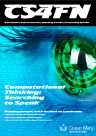
Cover of the Searching to Speak A5 booklet, click to open the PDF← Download a free copy of our latest booklet ‘Searching to Speak’ (which accompanies the first workshop in the series, on Tuesday morning) – click to open the PDF or right-click / save as to save a copy.


The admin bit:
All the workshops are free and will take place in Room 1.02 in the Law Building on Mile End Road. For those attending both morning and afternoon sessions (there’s an hour between the workshops) there are lunch options on campus (Mucci or Curve as well as snack shops) and plenty of food places on Mile End Road including a Sainsbury’s. You can attend as many workshops as you like.

Please contact me (Jo, j.brodie@qmul.ac.uk) if you have any queries.

Follow us on @TeachingLDNComp


Free 1-day taster course for Y12 school students interested in electronics & computing, in June

Teachers of Y12 students might be interested in this free taster course on computer science and electronic engineering, to be held at Queen Mary University of London (QMUL). This is part of the University of London’s series of short taster courses for school students which QMUL participates in.

Please note that this is not a Teaching London Computing course.

IMG_0023[1]

Taster Course – Electronics and Computing for the Digital Age
Course Date: 26 Jun 2013
Duration: One day (10am – 4.15pm)
Cost: FREE, booking required

“This 1-day course will provide an excellent opportunity for students to experience some of the exciting things that our degrees in Electronic Engineering and/or Computer Science have to offer.

You will be shown just some of the choices that are open to you in terms of specialist skills you can learn and the outstanding career opportunities they afford. During the day you will get “hands-on” experience with various activities. You will also meet staff and some of our existing undergraduate students to get a feel for life with us.”

Subject area/s: Audio Systems Engineering, Computer Science, Electronic Engineering, Engineering (Audio Systems), Engineering (Electronic), Information and Communication Technologies, Information Technology (IT), Multimedia and Arts Technology, Technology, Telecommunications

Course Requirements: This taster course is open to year 12 students and anyone who is planning on starting their undergraduates studies in September 2014. Students should be studying either AS Maths or Physics (or equivalent).

Students can apply here, and will be asked to write 150 words on why they’re interested in studying computer science / electronic engineering.

Can computers be creative? BBC R4 prog 15 May, 11.30am w Prof @Trevor_Cox

For those near a radio tomorrow morning Prof Trevor Cox is exploring whether we can consider computers as having the ability to be creative. His programme “Can a Computer Write Shakespeare?” will be broadcast on Thursday morning (15 May 2014) at 11.30am on BBC Radio 4, or you can listen online at the link given.

“Trevor Cox asks whether computers can ever be truly creative.

An old adage says that a monkey sitting at a typewriter could eventually write Shakespeare. By the same token, could a computer ever create a work of art that could match Shakespeare’s creativity?”

He’s also written a blog post “Can computers compose?” which talks about software used to create pieces of music, including a piece called ‘Adsum’ that had a full orchestral arrangement and premiere (see the video on Trevor’s blog).

For a more unplugged way of creating music have a look at Howard Goodall’s episode on Melody from his ‘How Music Works‘ series. In the video below (from 12min 54sec but Howard introduces the piece a few seconds before that) he asks people at a shopping mall to pick numbers from a bag and uses these to determine which notes to play on the piano, resulting in a piece of crowdsourced music.

How to enjoy a career in computing: the power of networks – 22 May, free, 5.15pm via @bcsacademy

Professor Dame Wendy Hall FRS FREng will present the 4th Karen Spärck Jones Lecture (an annual event that honours women in computing research).

A Digital Library by Eric Hackathorn

The influence of her work has been significant in many areas including digital libraries, the development of the Semantic Web, and the emerging research discipline of Web Science”

“In 1987, I co-authored a paper on the lack of women in computer science called “Where have all the girls gone?”. Twenty-seven years later things have changed depressingly little despite much effort across many different projects and initiatives. During that time however, I have (mostly) enjoyed a wonderful career in computing. In this talk I will reflect on how the power of networks has affected my career both in terms of the work I do and in terms of surviving, indeed thriving, in what is still very much a man’s world. I will also reflect on the current state of affairs with regards to women in computer science and in the wider STEM community. What lessons have we learnt and what hope is there for the future? As Karen Spärck Jones famously said – computing is too important to be left to men. But it is only by working together that we will change the gender balance in our industry. It’s time for men to make sacrifices as well.”

Karen Spärck Jones Lecture 2014 – Dame Wendy Hall
5:15 PM to 9:00 PM
BCS, The Chartered Institute for IT, First Floor, The Davidson Building, 5 Southampton Street, London , WC2E 7HA
Organiser: BCS Academy of Computing
Price: Free to attend
Book a free ticket.

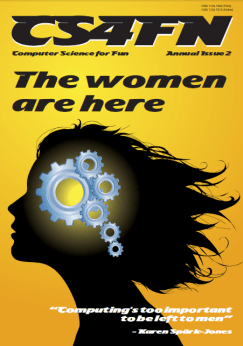
Our sister site, cs4fn (Computer Science For Fun) has a magazine called ‘The women are here‘ all about women in computing.

cs4fn's magazine celebrating women's contribution to computing


From around the web: #Eastbourne teachers: Introduction to Creative Computing Fri 9 May 1-4pm £30

From Connective Culture: Tech Resort & Towner Gallery via @aidandelaney

Eastbourne Pier

Friday 9 May 2014, 1pm – 4pm, £30, Towner Gallery, Eastbourne.

Introduction to Creative Computing
If you’re an Eastbourne based teacher, we want you to attend a half-day computing training to achieve two goals:
1. develop your technical skills in programming, and
2. give you some insight into the requirements in the new computer science curriculum.
We will provide a half-day supply cover and computing subject knowledge training for a small commitment fee of £30.

This is a joint project between the ArtsWork funded Creative Computing project, Eastbourne’s own TechResort and the Computing School at the University of Brighton.

We’re delivering training on the 9th of May at the Towner Gallery in Eastbourne on developing web and mobile applications using the JavaScript programming language. This will introduce the basics of JavaScript and creative problem solving.”

More information, and tickets: Introduction to Creative Computing

Please note: this is not a Teaching London Computing event, we just like sharing what other people are up to :)

What’s happening at Teaching London Computing this week? – free workshop, job vacancy closing

1. Free workshop – Monday 3 March 2014
Prof Paul Curzon will be running the third in his four-part series of FREE workshops for computing teachers in London. The talk starts at 5.30pm, at Queen Mary University of London (nearest tubes Stepney Green and Mile End, or 25 and 205 buses).

Programming unplugged: learning programming without computers is an inspiring free unplugged session on introducing computing concepts into the classroom.

“It’s easy to assume that programming is something you have to learn at a computer but if you want your students to deeply understand programming concepts, rather than blindly getting programs to work then unplugged techniques can work really well to get students started. We will see how to program a robot face that is made of students, look at a simple way to give a deep understanding of how variables work by making them physical, and see how to compile programs onto your class instead of onto a computer.”

Paul’s next workshop, on Computational Thinking: it’s about people too, will be the last in this series, though the talks will be repeated. Free tickets for the event, on Monday 17 March 2014, are now available if you want to book a place.

2. Job vacancy closing – Tuesday 4 March 2014
We’re looking for a research assistant / postdoctoral research assistant to help us develop our teaching support resources and evaluate them. The job is based at Queen Mary University of London (Mile End campus).

3. Looking ahead to April – a new short CPD course
We’ll be running another CPD course for London computing teachers, at King’s College London. “Computing CPD GCSE one week Easter 2014” runs from Monday 7 to Friday 11 April 2014 and tickets are available from King’s website. They cost £150 for London teachers (who are eligible for a 50% discount thanks to our funding) and cost £300 for non-London teachers, if space is available.


Turing lecture – free livestream on Monday 24 February, 6.30pm GMT

“Beyond silicon: cognition and much, much more” Monday 24 February, 18:30 GMT

The IET / BCS Turing lecture 2014 is being given in four cities this year (London, Cardiff, Manchester, Edinburgh). The London talk (at the Royal Institution) is fully booked but the IET will be hosting a free livestream of the talk as it’s given on the Monday evening.

Visit the IET’s Turing Lecture webcast site to see if your computer setup will let you view the stream.

More information at the BCS’s website on Beyond silicon: cognition and much, much more, and on the speaker – Bernard S Meyerson. The Turing lecture is given in honour of Alan Turing, an important figure in the history of computer science.

Free resource from cs4fn
We have a free PDF / web-based version of ‘The Alan Turing Issue‘ of cs4fn magazine (issue 14) for schools.

“…2012, marks one hundred years since the birth of Alan Turing. You may not have heard of him before, but he is one of the most important scientists of the last century. He worked on maths, logic, code-breaking and most importantly, he came up with some of the fundamental ideas that make computers work. He was one of the very first computer scientists.

In this issue we’ll explore Turing’s world-changing life and ideas, and we’ll check out the latest research in subjects he cared about. You’ll read about computers made from chocolate, the best ways to keep a secret and an animal that can survive being chopped into almost 300 pieces. It’s a pretty amazing world out there, made all the more amazing by Alan Turing’s work.”