TLC, as part of the Teaching London Computing project, is a cross-university inter-disciplinary research and impact team set up by members of the Cognitive Science Group of Queen Mary University of London, originally with Kings’ College London. More recently, members include researchers from Cambridge University / Raspberry Pi and the University of Sydney. We work with a wide variety of other partners to do practically useful Computer Science Education Research. This research underpins our own practice. We are an interdisciplinary team including computer scientists, computer science education researchers, professional development experts, sociologists, public engagement specialists and teachers. We work with teacher’s organisations, resource development organisations, teachers and students. Find out more about our main research themes below.
See our about us page for more about the team members.
Our research has had major impact nationally and internationally.
See our publications page for a list of publications by team members.
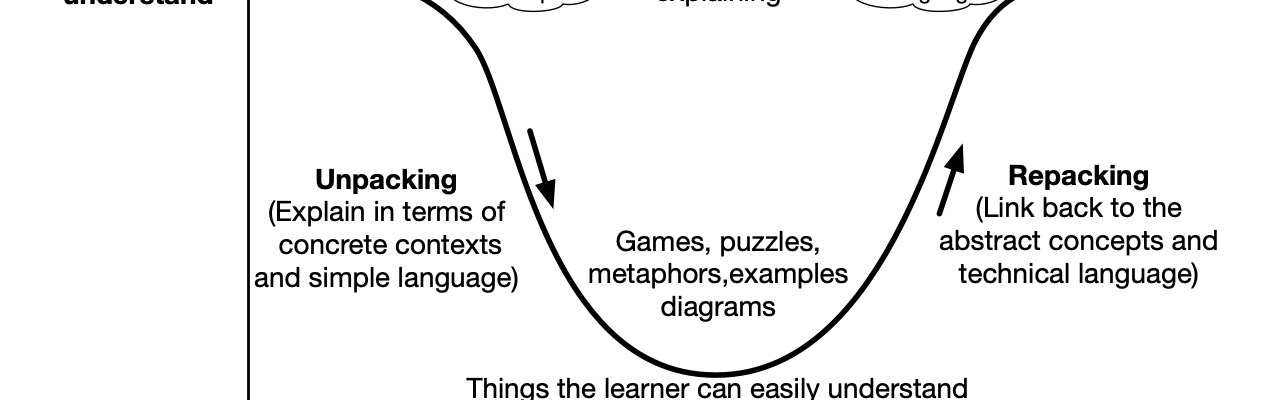
Semantic Waves: Good explanations and improving lesson plans

Find out how Semantic Waves can help you improve lesson plans, the way you explain and the way you use unplugged activities, as well as how you can get involved. We have translated the sociology theory: Legitimation Code Theory to Computer Science Education. Find out more.
Unplugged Computing
Our research on unplugged computing has shown its wide use, noted pitfalls and how to avoid them. Find wide-ranging unplugged activities for class room use via the menus at the top of the page. It is a powerful way to help students understand concepts especially the highly abstract concepts of Computer Science, making them physical and tangible. Find out more.

Storytelling
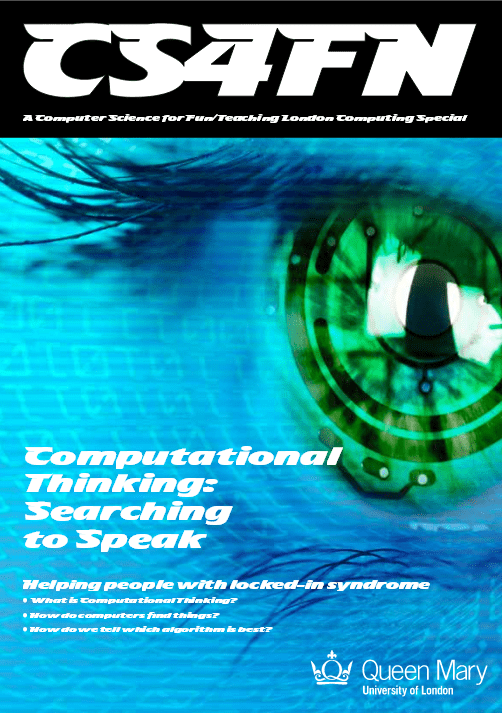
Storytelling is another powerful way to explain concepts. Use of human stories, narrative structure and twists can help make concepts memorable as well as giving them an everyday context. Find out more.
Autonomy and Interdisciplinary Teaching
Autonomy (thinking about content and purpose of steps of a lesson) gives a simple tool to help reflect on how to improve interdisciplinary teaching. We illustrated the idea using our approach of teaching computer science using conjuring and vice versa. The approach gives insights of how to improve the teaching of both. This translates another dimension of Legitimation Code Theory into Computer Science.

The importance of Design in Primary Programming
Jane Waite’s PhD has explored the importance of teaching design explicitly when teaching primary programming (equivalent to teaching planning with writing english). Working with expert teachers she developed a practical toolkit that helps. Read Jane’s Thesis here.

Computational Thinking
A theme running through much of our work has been how best to teach Computational Thinking with a focus on unplugged approaches using games, puzzles, magic and role play.

Teaching Through Magic and Mystery
Peter McOwan was project leader on a pan-European project on Teaching through Magic and Mystery (TEMI). This approach emphasises the need to set up mysteries to grab attention and drive learning. It explains the power of magic.

Diversity and Inclusion
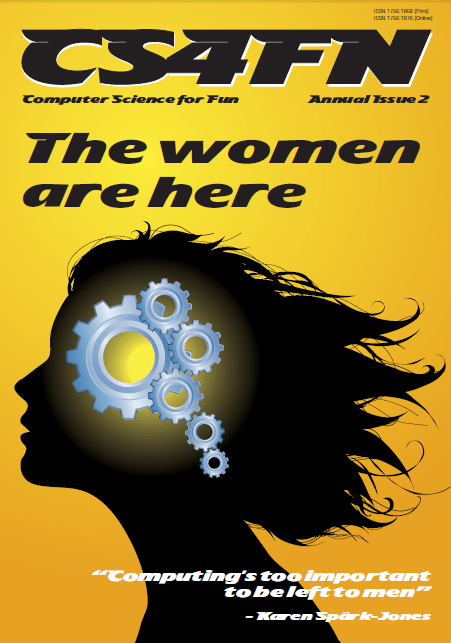
Diversity and Inclusion has been a major theme of our practical work, but this has also been backed by research with respect to the underlying issues. Earlier on we explored how to engage female students which formed our later work using role models. Find out more.

 Teaching London Computing: A RESOURCE HUB from CAS LONDON & CS4FN