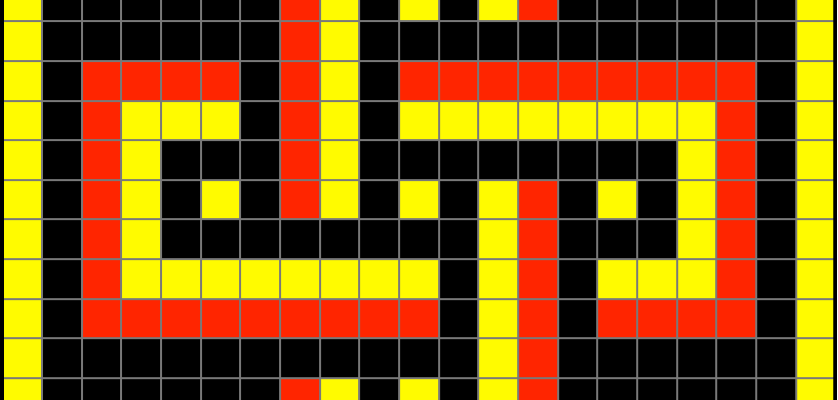


Well… one thing they’ve done is given us a nice art-based way to look at some aspects of computer science. The end result is some things to colour in while finding out more about pixels and data representation.

Themes: images, data representation, decomposition, data transmission, pixels, compression, binary, Roman history
The links below will take you to a copy of the puzzle files, with a little more information about how Romans used tesserae (small stones) to create images.
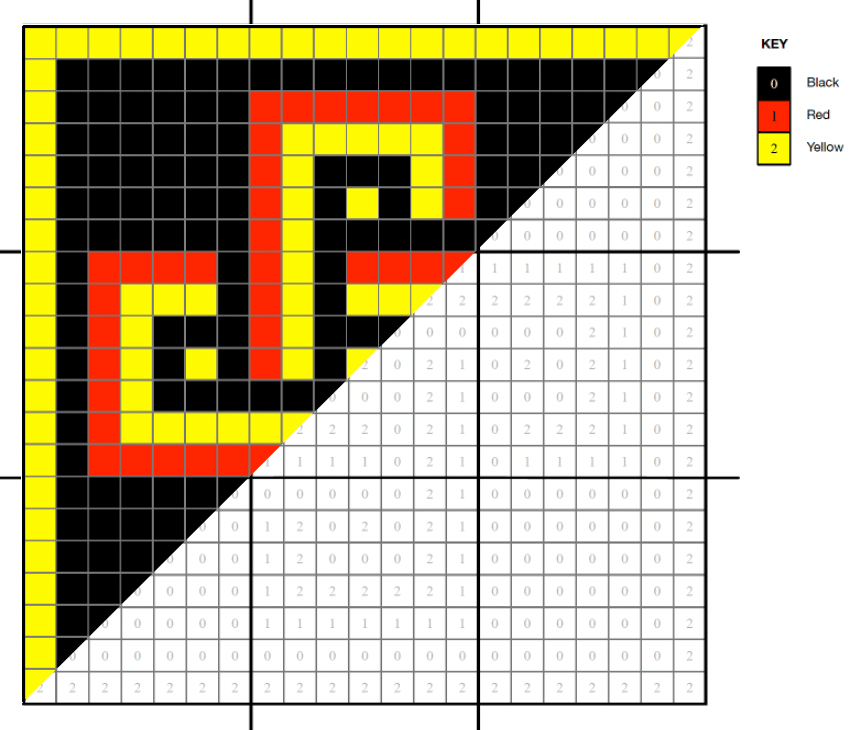
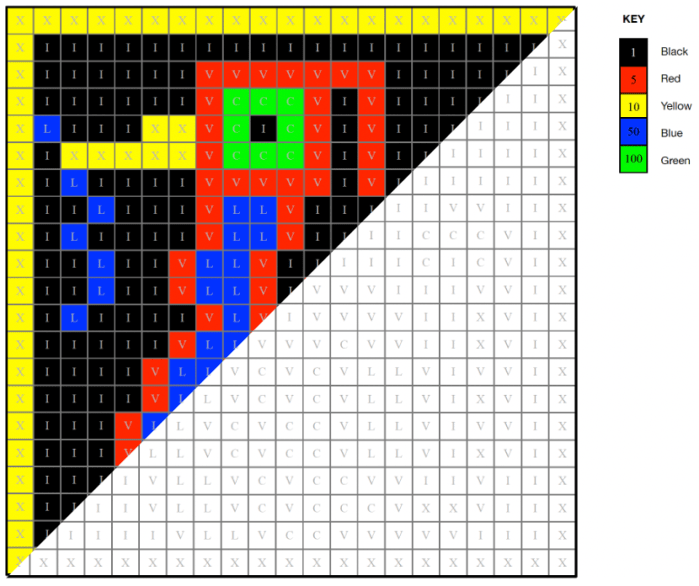
Our two Roman-themed puzzles are mosaics based on small coloured ’tiles’, like pixels. Each pixel colour is represented by a number (one of them uses Latin notation, V for 5 etc) and this is similar to the way in which digital images are stored. You could send the string of numbers to someone else and, as long as they know how to arrange them and have a copy of the representation code, they could recreate the image without ever seeing the original.
Each image has been decomposed into its constituent pixels and each pixel assigned a number. Print the puzzle sheet and follow the ‘colour by numbers’ code to fill the puzzle in. For the mosaic shape you could actually compress the information further, only a quarter of the file is really needed – the image is formed from the same unit repeated another three times with a 90 degree turn (rotational symmetry) each time.
The resolution of these two mosaics is 21 x 21 pixels, so each mosaic has 441 bits of information.
We’ve used several colours in our mosaics but you could create a simple black and white image using a binary code. In the 1970s astronomers sent a binary message via radiowaves into space (they actually transmitted it using a sound signal with two differently pitched tones). The message contained 1,679 bits of information which, if re-organised into a grid of 23 columns and 73 rows (both prime numbers), produced an image telling the recipient a little about what they might find if they visited Planet Earth. The astronomers included the numbers 1-10 in binary rather than Roman numerals however…
1. Roman numeral pixel puzzle (printable and online version)
2. Roman mosaic pixel puzzle (printable version)
Another look at data representation in this blog post on the CS4FN website.
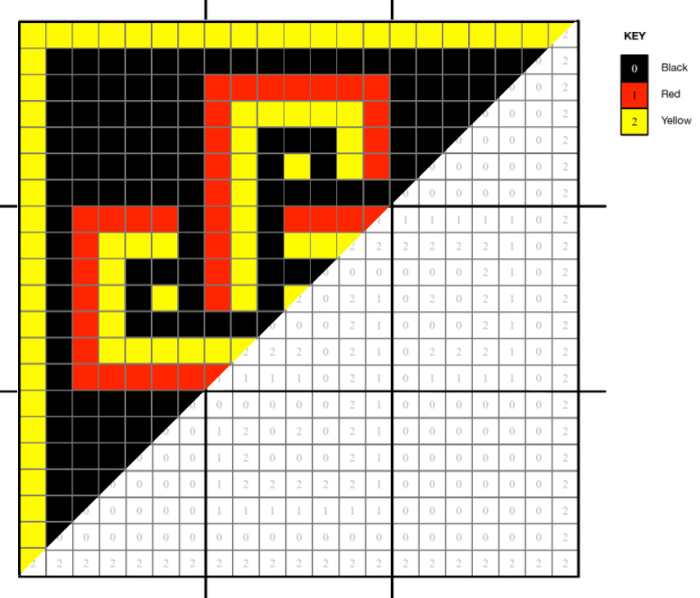
What you’ll find: printable colour by number puzzle with instructions (and a puzzle without instructions that you can put into your own worksheets) and a solution sheet.
3. On the difficulties of multiplying with Roman numerals
Another look at data representation, on the CS4FN blog.

This blog is supported through EPSRC grant EP/W033615/1.
 Teaching London Computing: A RESOURCE HUB from CAS LONDON & CS4FN